Koh Samui: A Guide for Digital Nomads and Long-Term Stays
For those dreaming of island life: dive into Koh Samui’s seasons, infrastructure, activities, communities, and essential services.
Getting Started: Key Considerations
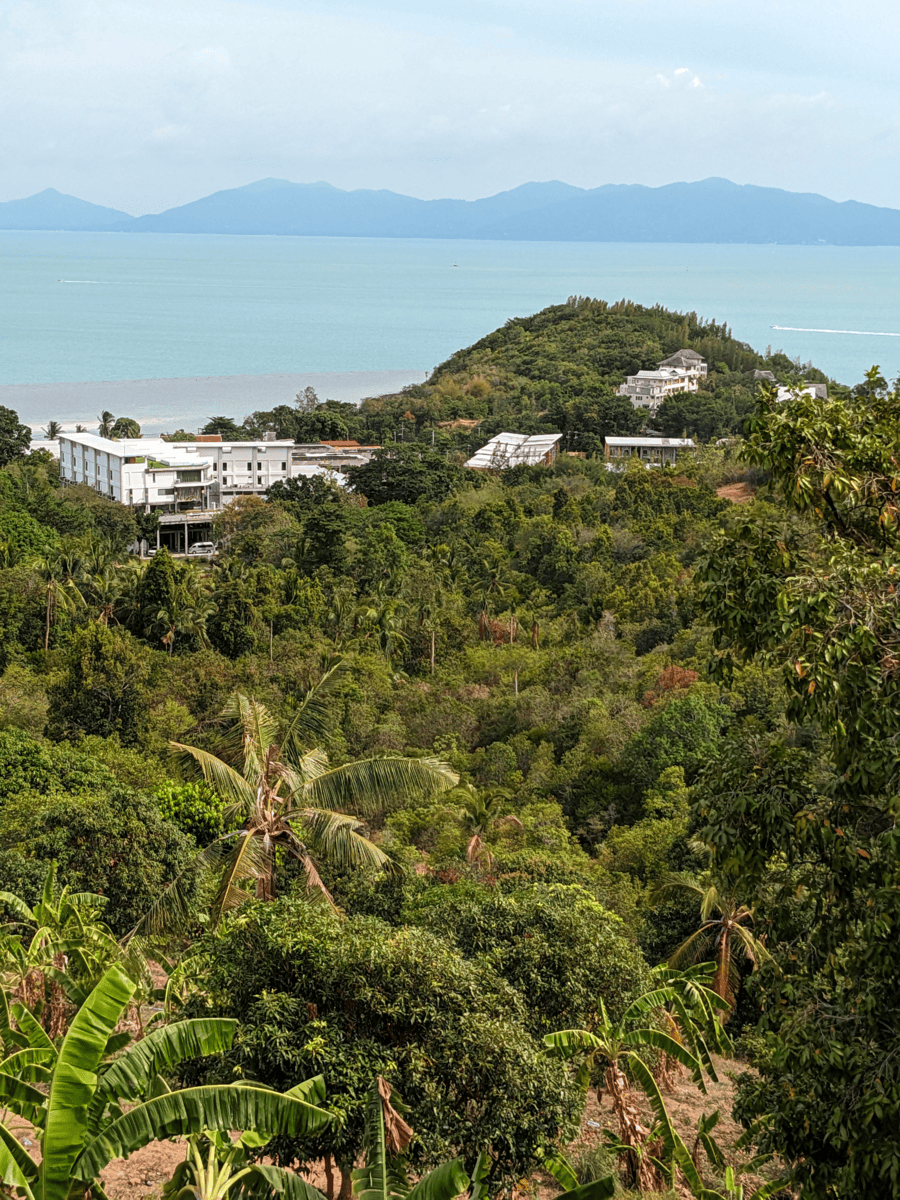
Koh Samui became a second home for me. I’ve lived here for about two years in total, which is actually quite short compared to many local “winter birds” and expats. I firmly believe Samui is a place that reveals its charms gradually; first impressions are often incomplete and misleading. Furthermore, to truly enjoy life here, you’ll need to master riding a scooter and understand the nuances of finding accommodation.
The Scooter (Motorbike)
To experience Koh Samui properly, knowing how to ride a scooter is absolutely essential. Ideally, you should have travel insurance that covers scooter accidents and the appropriate motorcycle license (Category A or equivalent) for that insurance to be valid. Without a scooter, you’ll find yourself severely limited. Relying on taxis will break the bank, and public transport won’t get you most places you want to go. Local taxis operate somewhat like a cartel, dictating high prices – sometimes renting a scooter for a day is cheaper than a single taxi trip to the supermarket. Renting a car is an option, but parking and navigating the roads to interesting spots becomes much more cumbersome. Car parking spaces are generally scarce, often filled with scooters. Walking isn’t practical either due to long distances, a general lack of sidewalks (pavements), and few pedestrian crossings. Honestly, crossing the road is often easier on a scooter than on foot.
The good news? Samui is an excellent place to learn to ride. The traffic is mostly calm: people aren’t rushed, aggressive, or constantly honking. There are quiet areas perfect for practicing, and automatic scooters are easy to pick up in a couple of days, especially if you have experience with bicycles or electric scooters. You can even find instructors for a few lessons. The main ring road is straightforward, with few traffic lights or complex junctions, and police are generally not overly concerned with tourists on scooters. For the most part, you can comfortably ride along the edge of the road at your own pace without bothering anyone.
Accommodation
Another hurdle for newcomers is finding housing. Hotels are easy to find on sites like Booking.com. However, securing a house with a kitchen in a quiet, natural setting (which is arguably the best way to experience Samui) usually requires searching on Facebook groups or driving around neighborhoods yourself, calling the numbers listed on “For Rent” signs.
Finding and securing a good long-term house before arriving on the island is nearly impossible and very risky. Your best bet for remote booking is Airbnb. Prices will be significantly higher, and the selection of desirable houses smaller, but it offers some level of guarantee. I strongly advise against making arrangements or transferring money via Facebook or Telegram in advance.
Dealing with expat “realtors,” especially Russian-speaking ones, is generally not recommended. The risk of losing your money without securing accommodation is too high. The island has its share of “fixers” who operate in this grey area. Thai landlords, while generally not malicious (more uncomplicated than greedy), can also be unreliable for advance remote bookings. You might find the place you thought you booked is already taken, the previous tenant hasn’t moved out, someone offered a better price, or various other reasons crop up. They aren’t always bound by verbal agreements made remotely. While face-to-face dealings are usually fine, relying on advance promises is unwise. Arranging a formal contract remotely is also unlikely, and certainly not advisable for a long-term rental without seeing the property yourself. Photos can hide a multitude of issues.
So, the best strategy is: book a hotel or Airbnb for a week or two, arrive on the island, rent a scooter, monitor Facebook rental groups, call listings, and go view properties in person. Even when considering a long-term Airbnb rental, it’s wise to visit the area first before committing.
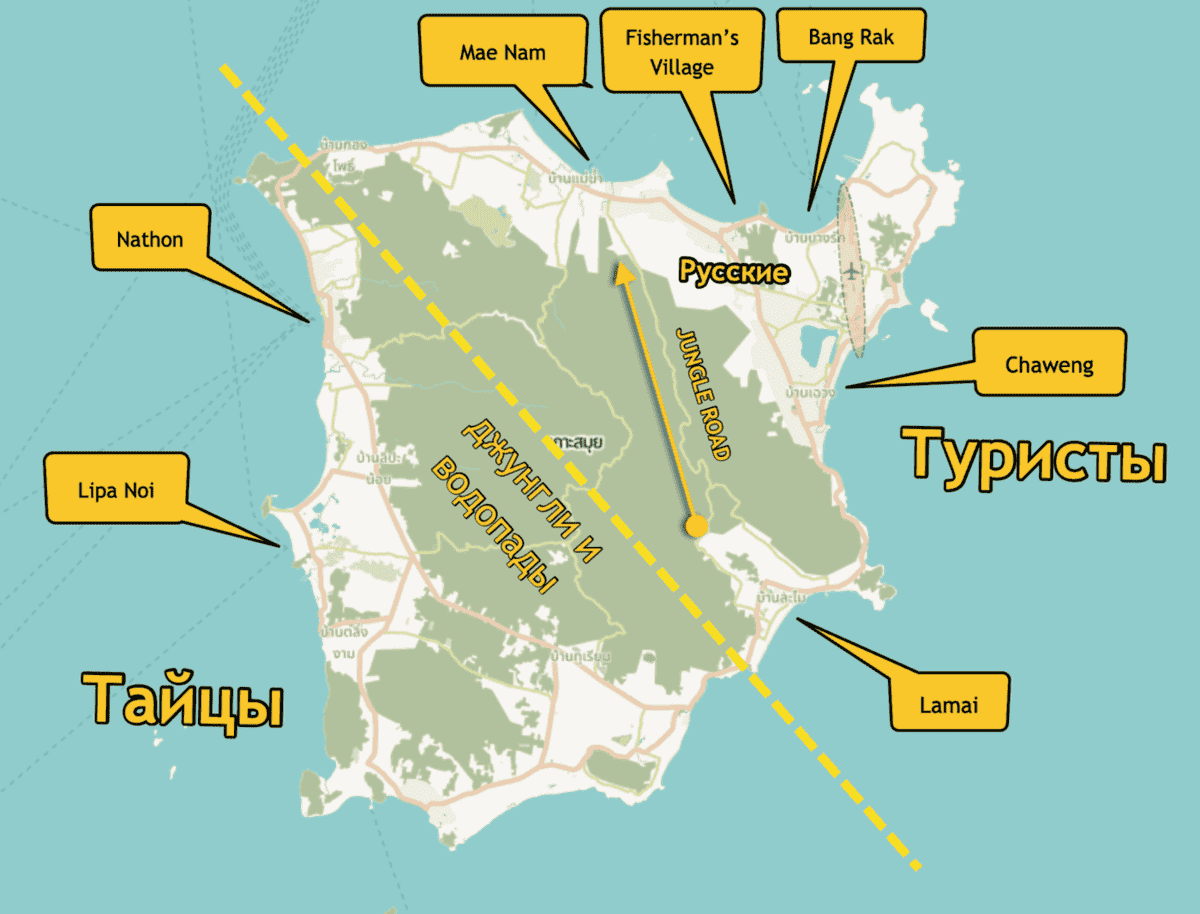
The island is divided into several districts, each with its own character. Some are ideal for quiet family life, others known for nightlife, some cater to affluent Europeans, and others are predominantly local Thai areas. You’ll also find undeveloped, stunningly beautiful spots with minimal infrastructure. Choosing the right area is key, and ideally, experiencing life in different parts of the island offers a richer perspective. I have a separate note detailing Samui’s districts:
Is Koh Samui Suitable for Long-Term Living?
Yes, Samui is one of the most comfortable places in Thailand for expats, while still retaining an authentic feel and not being completely overrun. Many people have settled here more permanently, starting businesses like cafes, scooter rentals, shops, etc. Expats buy property and either live here year-round or return seasonally. Unlike some places in Thailand, it’s genuinely possible to feel like part of the local community on Samui; the Thais are accustomed to having long-term foreign neighbors.
Furthermore, in my opinion, Samui is arguably the only island in Thailand truly suited for extended stays. The main alternative is Phuket, which isn’t technically an island in the same way and feels far more tourist-centric. Accommodation there heavily leans towards small studios designed for short holidays. Koh Phangan is another possibility, but it’s decidedly more rugged and “wild.” Housing is scarcer and generally of lower quality. Other Thai islands are primarily suited for short trips and vacations.
Infrastructure
Samui boasts an airport with regular flights to Bangkok (about every half hour, just a one-hour flight). This opens up vast travel possibilities, as Bangkok is a major international hub. Even a weekend or week-long trip to Bangkok is easily manageable.
Healthcare includes the Bangkok Hospital (part of a large, reputable chain found across Thailand, known for high service levels and higher prices – manageable with good insurance) and numerous smaller private clinics.
For shopping, there are several large malls like Central Samui, Tesco Lotus, Big C, etc.
Restaurants and cafes cater to all tastes and budgets, though they are concentrated in specific areas like Chaweng, Lamai, Bophut, and Fisherman’s Village. You can even find a couple of specialty coffee shops, although Samui isn’t a major coffee destination overall. More on cafes here:
For fitness and wellness, you’ll find gyms, Muay Thai training camps, yoga studios, spas, massage parlors, tennis and paddle courts, badminton courts, and public sports grounds for basketball and football.
Everyday conveniences like tech repair shops, copy centers, delivery services, and other essentials are readily available.
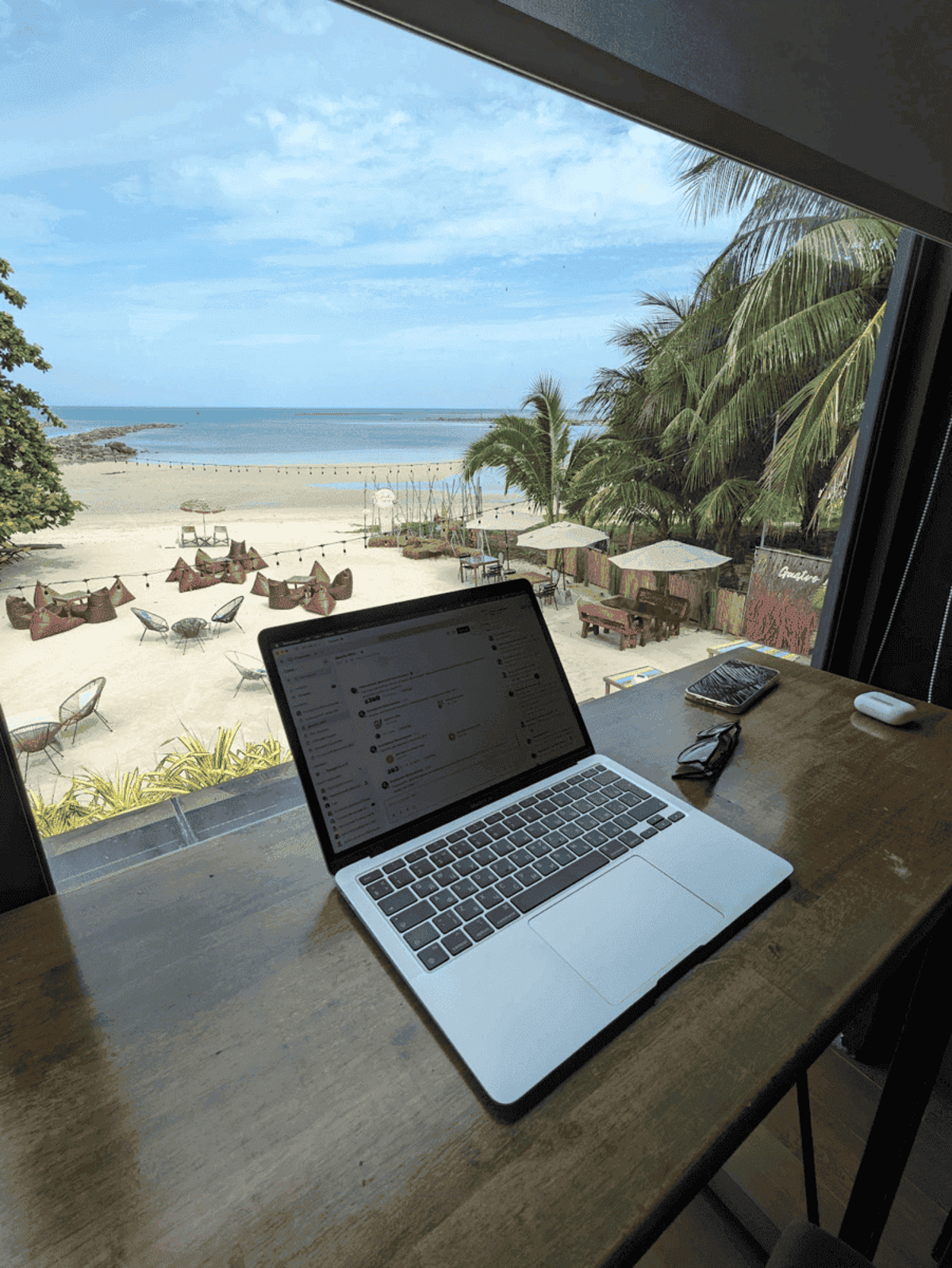
What’s lacking are high-quality co-working spaces. While pleasant cafes can serve the purpose, dedicated co-working facilities with excellent amenities and a productive atmosphere are scarce. Plus, the general island vibe leans more towards relaxation than intense work. Your best bet is often to find accommodation with a comfortable workspace. Internet connectivity is usually reliable.
Cultural Activities & Entertainment
The cultural scene is distinctly “island-style.” Daily life revolves around beaches, restaurants, cafes, bars, and massages. Weekends offer opportunities to explore waterfalls, viewpoints, neighboring islands, diving, and snorkeling. And of course, Muay Thai.
Occasionally, you’ll find parties at beach clubs or live music in bars and food courts, but don’t expect major international acts. Sometimes touring stand-up comics (often Russian-speaking) perform, but this is rare.
Expat communities, particularly Russian-speaking ones, often form clubs based on interests: hiking groups, board game nights, basketball meetups, badminton clubs, etc. These are typically organized through Telegram chats, where you can also find various local “fixers,” service providers, and informal agents.
Beaches
Beach life on Samui is pleasant, though perhaps not world-class compared to some other Thai destinations like Phuket, but certainly better than places like Pattaya. The main characteristic is that many beaches are relatively undeveloped and shallow, making them great for walks and sunbathing, but not always ideal for swimming.
The main beaches for swimming on Samui are:
- Chaweng and Lamai: Large, popular, long beaches lined with numerous cafes and restaurants.
- Coral Cove and Silver Beach: Smaller, incredibly picturesque coves nestled among rocks and greenery.
My personal favorite is Coral Cove – it truly delivers that tropical island feeling.
Beach conditions vary significantly with the seasons. Sometimes the water can be murky or dirty, or red flags might be up due to dangerous conditions (strong waves, currents during storms) or hazardous marine life.
Running or exercising on the beach is possible year-round, but swimming is often dependent on location and current conditions.
Cinema
Samui has a couple of cinemas located in shopping malls:
- Tesco Lotus (Chaweng): Films often dubbed in Thai.
- Central Samui: Often shows films with the original English soundtrack (usually with Thai subtitles).
Check showtimes here 👉 www.majorcineplex.com.
Cinemas aren’t extremely popular here. You’ll find major blockbusters, but arthouse or independent films are unlikely.
Muay Thai
The island’s star attraction is undoubtedly Muay Thai (Thai Boxing).
Samui hosts international tournaments and has numerous reputable training camps and gyms. If you’re a fan of martial arts, you’ll love it here. The two main stadiums for watching fights are Phetchbuncha Stadium and Samui International Stadium.
Keep expectations in check for the regular fight nights, however. Based on my experiences, they often feature novice fighters, possibly drawn from local training schools rather than seasoned professional circuits.
Delivery Services
Delivery is well-developed in Thailand, and Samui is no exception. You can get almost anything delivered: food, drinks, groceries, clothing, some medications, spare parts, and electronics.
However, be prepared for some quirks. Delivery drivers often don’t speak English well. Explaining your location can sometimes be challenging. Resolving any complex delivery issues often turns into a bit of an adventure (a “quest”).
Food Delivery
Samui offers a decent selection of restaurants and cafes available for delivery, especially on the northern side of the island. Cuisines include Indian, Italian, Japanese, Chinese, Thai, and even Russian. Healthy eating and vegetarian options are also available.
Main delivery apps:
- FoodPanda: The most popular and widely used service.
- Line Man: More geared towards locals, but some unique eateries are only listed here.
Goods & Shopping
Lazada and Shopee are the dominant local e-commerce platforms, similar to Amazon or eBay. You can find almost anything sold within Thailand here. Product listings and descriptions are often in Thai, but readily handled with online translation tools.
International sites like iHerb and Aliexpress also deliver to Samui, but often you can find equivalent items locally via Lazada or Shopee.
Luggage & Moving Items
If moving within Thailand (e.g., from another island or city), you can easily ship your belongings using Thai Post or a courier service. I personally shipped boxes from Koh Phangan to Samui using Thai Post – bought boxes at the post office, packed my stuff, and it arrived cheaply and conveniently within 2-3 days.
For courier services, Kerry Express is highly recommended – they are reliable, have an app, provide cost calculators, etc. There is also a CDEK branch on the island (a Russian courier company).
Seasonality on Koh Samui
The most comfortable period is winter (December to February). During this time, Samui enjoys dry, sunny weather that isn’t excessively hot. There can be slight variations – the autumn rainy season might linger into late December, or the spring heat might arrive early in February. But generally, winter is the prime season. For nomads and long-term visitors planning a winter stay, I recommend searching for and booking accommodation before December starts. Ideally, arrive in November to search locally. By December, the best options are usually snapped up until March.
Spring (Approx. March - May)
Spring on Samui marks the transition to genuinely hot weather. Temperatures peak around mid-April, humidity rises significantly, and overall, it can be quite uncomfortable. Short, sudden rain showers become more common. It’s typical in spring to be riding your scooter, get completely soaked by a downpour, and then dry off again in the sun within a 30-minute ride.
Mid-April is Songkran, the Thai New Year, famous for its nationwide water fights. This tradition symbolically welcomes the shift towards the wetter season. Remaining tourists enthusiastically participate. After Songkran, tourist numbers drop significantly, leading to better availability of excellent housing options and more attractive rental prices.
Summer Months (Approx. June - September)
Summer is characterized by high heat and humidity. Short rain showers are frequent, especially at night, but the moisture quickly evaporates under the strong sun, making the air feel heavy and muggy.
The intense humidity means you sweat more easily, even with minimal exertion. Clothes feel sticky, and simple movements can be uncomfortable. Life without air conditioning during summer becomes a real challenge.
The heat and humidity also tend to dampen enthusiasm for running or any strenuous outdoor activities. Tourist numbers are low, and beaches are often empty. Swimming is generally still possible, though conditions can vary. The island doesn’t shut down completely – businesses stay open year-round – but it feels noticeably quieter.
Strong nighttime storms can occur during the summer months. Occasionally, certain areas (like Lamai) might experience power outages for several hours after a storm. Electricity issues often cause water problems as pumps fail, leading to very low water pressure or no water at all. This can affect homes without backup water tanks. Power outages also force shops to close, as payment terminals and cash registers won’t work. While some larger stores have generators, it’s not the norm. The same applies to restaurants – no power means no kitchen operations.
These disruptions aren’t constant, perhaps occurring only once or twice a month during the peak of summer humidity.
Autumn (Rainy Season: Approx. October - Mid-December)
Samui’s main rainy season typically starts in October and lasts until mid-December. This period accounts for the majority of the island’s annual rainfall.
Skies are often grey and overcast. Light, persistent drizzle lasting all day is common, though clear days also occur. Heavy, prolonged downpours capable of causing temporary flooding on streets and roads are also part of the season.
Temperatures usually remain above 25°C (77°F), but the high humidity and increased wind can make it feel noticeably cooler, almost autumnal. Riding a scooter in rainy and windy conditions is quite uncomfortable. However, this season can be ideal for focused work. You often don’t need air conditioning, the sound of rain can be soothing, cafes are quieter, and it’s perfect weather for hot coffee or tea.
Many outdoor activities become unavailable or severely limited during this time. Boat trips to other islands, snorkeling, diving, kayaking, SUP boarding, and hiking are often affected. Water-based activities depend heavily on sea conditions (storms, waves), while hiking trails can become muddy and treacherous due to the rain.
Even on days that appear clear during the rainy season, beach activities might be restricted due to strong waves, murky water remaining after storms, or the arrival of potentially hazardous jellyfish blooms.
MORE